Why Being Kinder to Yourself Can Help Calm an Overwhelmed Mind

How mindful self compassion can quieten the inner critic and help us reconnect with our Inner Compass.
Have you ever noticed how easily you can offer kindness and encouragement to a friend, yet speak to yourself in ways you would never dream of speaking to someone you care about?
For many of us, the inner voice can be relentless. Keep going. Work harder. Hold everything together. Don’t let anyone down.
I know this pattern well. Earlier in my career, working across manufacturing, museums and economic development, my response to pressure was often to work harder and take more on myself. From the outside this can look like capability and resilience. Inside, however, we may be carrying stress, struggling with boundaries and feeling that whatever we do is never quite enough.
Does that sound familiar?
Over time, through mindfulness, coaching and my MSc studies, I began to understand that there is another way of relating to ourselves.
What is mindful self compassion?
Self compassion isn’t about lowering our standards or simply making ourselves feel better.
Research by Dr Kristin Neff and Dr Christopher Germer suggests that self compassion supports emotional resilience, psychological wellbeing and healthier ways of coping with life’s challenges. Far from reducing motivation, it can help us learn from setbacks and keep moving towards meaningful goals without becoming trapped in harsh self criticism.
Dr Kristin Neff’s model describes three interconnected elements: mindfulness, self kindness and common humanity. I like to think of each as helping us find a wiser middle way.
Mindfulness: seeing more clearly

Imagine receiving negative feedback at work. We might become consumed by it, replaying the conversation repeatedly. Or we might dismiss it, become defensive and refuse to engage.
Mindfulness offers a middle way. We pause, notice our reaction and become curious:
Is there something here I can learn from? What belongs to me, and what perhaps doesn’t?
Notice the tone of the voice inside. Is it harsh, judgemental and super critical? Or can we bring Wise Discernment, a more balanced and curious voice that helps us decide what is genuinely useful?
We can learn from an experience without turning it into an attack on ourselves.
Self kindness: what do I really need?
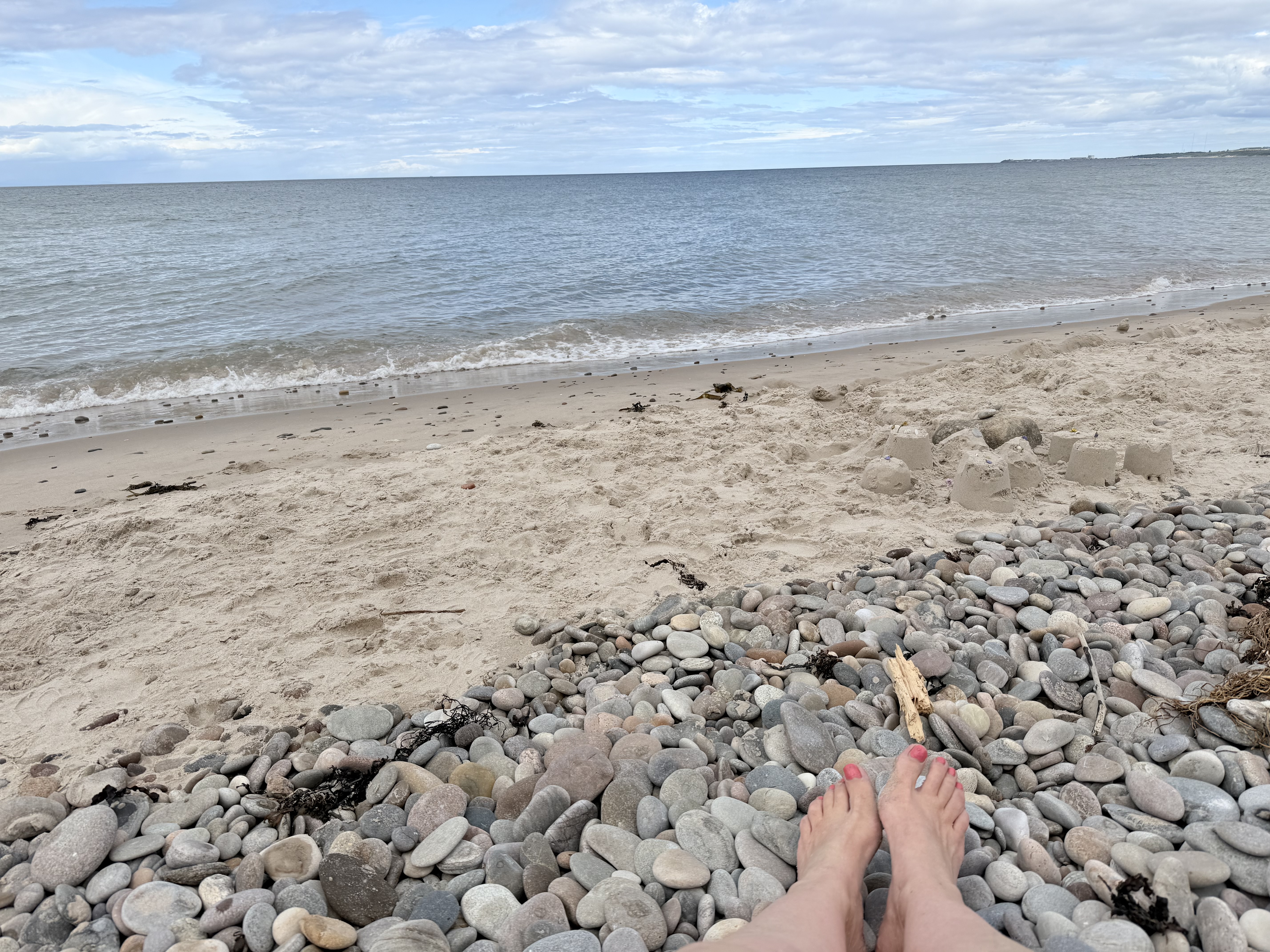
Self kindness doesn’t mean giving ourselves whatever feels comforting in the moment.
After a difficult day, I might think, “I’ll be kind to myself tonight,” and eat far more ice cream than my body wants or drink too much alcohol. It might soothe me temporarily, but if I wake up feeling unwell, was that really kindness?
Sometimes kindness is comforting and tender. At other times it means caring for our future self too.
What do I genuinely need right now?
Perhaps rest, nourishment, a walk in a favourite place, connection with a trusted friend or colleague, asking for help, setting a boundary or simply permission to stop.
Common humanity: I’m not alone

When we’re struggling it is easy to think, “Everyone else seems to be coping. Why can’t I?”
Common humanity reminds us that difficulty, mistakes and self doubt are part of being human. Other people struggle too, even when we cannot see it.
And compassion for others doesn’t mean absorbing everyone else’s problems. We can stay connected to others without abandoning our own needs and boundaries.
Together, these three elements give us a different way to respond:
Mindfulness helps us pause and see clearly. Self kindness helps us respond with care. Common humanity reminds us we are not alone. Wise Discernment helps us choose what is genuinely needed.
From overwhelm to reconnecting with your Inner Compass

When we continually criticise ourselves or live under sustained pressure, our body’s stress responses can remain activated. It becomes harder to think clearly and easier to react automatically.
Professor Paul Gilbert OBE, whose pioneering work has contributed enormously to our understanding of compassion, said at the Sussex Mindfulness Conference in Brighton in 2026:
“Compassion is the most courageous and wisest of all our emotions.”
Professor Paul Gilbert ( Sussex Mindfulness Conference Brighton, 2026)
I particularly like the word courageous.
Self compassion isn’t always the easy option. It might ask us to rest, set a boundary, ask for help, say no, have a difficult conversation or make a change.
As we learn to pause and meet ourselves with greater awareness and compassion, the inner noise can begin to soften.
We reconnect with what I call our Inner Compass, that steadier place within us where our values, experience, intuition and inner wisdom can be heard more clearly.
Self compassion therefore isn’t simply about feeling better. It can help us live, work and lead differently.
Three simple ways to begin

Notice your inner voice. When something goes wrong, become curious about how you speak to yourself. Is that voice helping you see clearly or simply making you feel smaller?
Ask what you need. Pause and ask, “What do I genuinely need right now?” Sometimes compassion is reassurance. Sometimes it requires courage and action.
Create a mindful pause. Take one slow breath. Feel your feet on the floor. Even a few seconds can create space between what happens and how you respond.
A different relationship with ourselves
Self compassion has helped me respond to setbacks with greater kindness and perspective. It hasn’t happened overnight. Like any meaningful change, it has taken learning, practice and support, and it continues to be a practice.
This is one reason creating reflective spaces has become important in my coaching work. We don’t always need to have the answers or hold everything together. Sometimes we need somewhere safe enough to pause, listen and discern what we genuinely need.
So perhaps the next time your inner critic appears, rather than immediately believing it, ask:
What do I need right now that is genuinely caring, wise and helpful?
Because when we learn to relate to ourselves with kindness rather than criticism, we don’t become weaker.
We become steadier, clearer and better able to meet whatever life brings.
With warmth,
Lou
Research: This article draws on the work of Dr Kristin Neff, Dr Christopher Germer and Professor Paul Gilbert OBE, alongside my MSc studies in Mindfulness at the University of Aberdeen. Further evidence and resources are available on the elementas Research page.
An earlier version of this article was first published by Life Coach Directory in July 2026.
To have a self-compassion experience book a 1:1 coaching or try out my women’s give backs – https://elementascoaching.com/experiences/