
Self-leadership with Compassion
Research into mindful self-compassion and leadership
How can leaders care for themselves while carrying responsibility for others?
This question was at the heart of my MSc research at the University of Aberdeen. My small pilot study explored how mindful self-compassion could be introduced through coaching for male business leaders.
The two participants described greater awareness of stress, self-criticism and their own needs. They also began exploring healthier boundaries and practical ways to support themselves. Their experiences offer a promising foundation for further research.
Why I explored this
Self-compassion has been important in my own mindfulness journey and in how I care for myself at work and home.
Through my business coaching, I have met leaders who give a great deal to others while finding it difficult to recognise their own needs. In smaller organisations, leaders may have limited support and few opportunities to pause or talk openly about the pressures they face.
I wanted to explore whether coaching could offer a supportive space to develop self-compassion, with a focus on wellbeing and resilience.
What is mindful self-compassion?
Mindful self-compassion means noticing when something is difficult and responding to yourself with care. It brings together three elements:
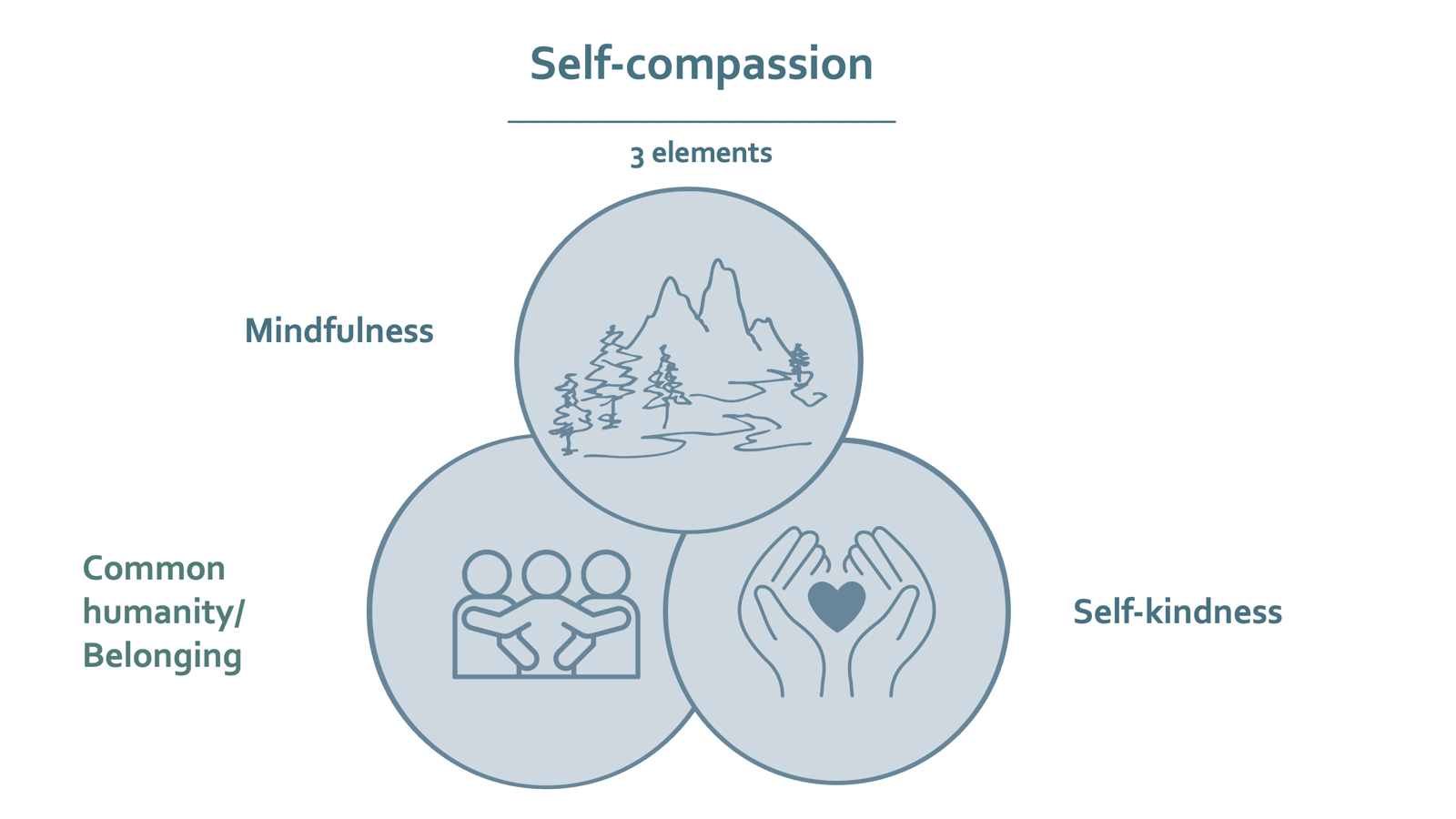
- Mindfulness: recognising your thoughts and feelings without becoming overwhelmed by them.
- Common humanity: remembering that difficulty is part of being human. You are not alone.
- Self-kindness: offering yourself understanding and support when things are hard.
In coaching, this might mean noticing stress earlier, questioning a harsh inner voice or asking yourself: “What do I need right now?”
Care and courage
The research explored two complementary expressions of self-compassion.
Tender self-compassion involves reassurance, acceptance and care. It might mean allowing yourself to rest or acknowledging that a situation is painful.
Fierce self-compassion involves protection and constructive action. It might mean setting a boundary, asking for help or speaking up about an unreasonable workload.
Together, these offer a way to explore both looking after yourself and making necessary changes.
How the study worked
The research formed part of my MSc Studies in Mindfulness dissertation, completed in 2023.
Two male business leaders took part in three face-to-face coaching sessions within a four-month learning process. Both already knew me and had some experience of coaching or mindfulness.
This was a qualitative study, meaning it explored their experiences in depth rather than measuring results statistically.
Participants completed online reflections between sessions and a final interview. Their names were changed to protect their privacy.
What we practised
The sessions combined reflective conversation with simple practices, including:
- Breathing to pause and settle.
- Grounding through awareness of the body.
- Using compassionate words during difficulty.
- “Taking in the Good”: pausing to appreciate positive experiences and achievements.
- Exploring boundaries and personal needs.
Practices were adapted to each participant. Trust, choice and emotional safety were central to the approach.
What participants described
Recognising stress and personal needs
Both participants became more aware of connections between their thoughts, emotions, physical sensations and working habits.
Exploring healthier boundaries
One described becoming more willing to ask for help, delegate and take time away from work. He also recognised that saying no remained difficult.
Making room for self-appreciation
The other noticed how easily he moved past his achievements without acknowledging them. He began exploring whether he could offer himself the care he readily gave to others.
Using tools beyond the sessions

Participants described returning to breathing and compassionate language in everyday situations. Reflection helped them notice both progress and continuing challenges.
Connecting self-care with leadership
Both considered how looking after themselves related to the way they supported and led others.
What the research can tell us
The study offers detailed insights into how two leaders engaged with self-compassion through coaching.
It does not prove that the approach will work for everyone. There was no comparison group, and longer-term benefits were not established. Changes in physical health, brain function and team outcomes were not measured.
The participants’ existing relationship with me supported trust. However, the study did not establish that a prior relationship or face-to-face delivery is essential.
An important finding was that awareness and lasting change are different things. Participants recognised helpful ideas while continuing to struggle with habits, confidence and self-criticism.
How this informs my coaching
This research continues to inform my work at elementas.
It reinforced the value of accessible practices, thoughtful reflection and a trusting relationship. It also highlighted the importance of balancing encouragement with appropriate challenge and respecting each person’s pace.
Although the study focused on men, questions about self-care, boundaries and leadership can be relevant to people of any gender.
My work supports coaching, leadership development and workplace wellbeing. elementas does not provide psychotherapy or clinical mental health treatment.
Watch the research presentation
In this presentation, I explain the study, the coaching practices and what participants shared.
Watch Lou Booth’s presentation on mindful self-compassion and leadership
References and further reading
A written summary is provided on this page so you can explore the research without watching the video.
Find out more
If you would like to discuss the research or explore compassionate leadership coaching, I would welcome a conversation.
Email Lou about the research or coaching
You can also use the enquiry form below.

Research by Lou Booth, MSc Studies in Mindfulness, University of Aberdeen, 2023.


